

Mexico’s Yucatán Peninsula is one of the most rewarding regions in the country — a tropical world of Caribbean beaches, Gulf Coast cities, cenotes, Mayan ruins, colonial plazas, jungle roads, island ferries, RV routes, and unforgettable road trips.
This guide connects the full region: Quintana Roo, Yucatán, and Campeche, including Cancun, Tulum, Playa del Carmen, Cozumel, Holbox, Bacalar, Mérida, Valladolid, Campeche City, Chichén Itzá, Uxmal, Edzná, and Calakmul.
The Yucatán Peninsula is the large limestone region in southeastern Mexico that separates the Gulf of Mexico from the Caribbean Sea. In Mexico, the peninsula includes three states: Yucatán, Campeche, and Quintana Roo.
For travelers, this means the region has two very different coastal personalities. The Caribbean side includes Cancun, Playa del Carmen, Tulum, Cozumel, Holbox, and Bacalar. The Gulf and inland side includes Mérida, Valladolid, Progreso, Izamal, Uxmal, Campeche City, Edzná, and Calakmul.
The peninsula is famous for Mayan civilization, cenotes formed in limestone, colonial cities, haciendas, reef systems, mangroves, islands, Gulf Coast seafood, Caribbean beaches, and some of the most approachable road trips in Mexico.

The Yucatán Peninsula is best understood through its three Mexican states. Each one offers a different travel personality: Caribbean beaches, colonial cities, Gulf Coast culture, Mayan ruins, cenotes, jungle routes, and road-trip gateways.

The Caribbean side of the peninsula, home to Cancun, Tulum, Playa del Carmen, Cozumel, Holbox, Bacalar, reefs, beaches, resorts, and Riviera Maya road trips.
Explore Quintana Roo
The cultural heart of the peninsula, centered around Mérida, Valladolid, cenotes, haciendas, Mayan ruins, henequen history, colonial towns, and Gulf Coast escapes.
Explore Yucatán
A quieter Gulf Coast state known for Campeche City, pirate walls, pastel streets, Edzná, Calakmul, mangroves, seafood, and southern road-trip routes.
Explore CampecheUse these destination guides to plan your route by interest: beach towns, island escapes, colonial cities, cenotes, Mayan ruins, diving, food, RV travel, and long-stay Mexico trips.

Airport gateway, beaches, resorts, nightlife, tours, and northern Riviera Maya access.
Explore Cancun →
Mayan ruins, beaches, cenotes, boutique hotels, wellness, and jungle road trips.
Explore Tulum →
Fifth Avenue, beach clubs, resorts, cenotes, nightlife, and Cozumel ferry access.
Explore Playa →
World-class diving, snorkeling, reefs, island beaches, ferries, and cruise travel.
Explore Cozumel →
Island hammocks, whale sharks, birds, murals, golf carts, and slow beach days.
Explore Holbox →
Lagoon of Seven Colors, Canal de los Piratas, Cenote Negro, kayaking, and sailing.
Explore Bacalar →
Colonial architecture, museums, food, plazas, haciendas, and the cultural heart of Yucatán.
Explore Yucatán →
Walled city, pirate history, pastel streets, forts, Gulf Coast sunsets, and Edzná access.
Explore Campeche →The Yucatán Peninsula is one of Mexico’s best regions for road trips because the routes connect major airports, beach towns, colonial cities, cenotes, Mayan ruins, Gulf Coast stops, and RV-friendly travel corridors.
If you are driving a foreign-plated vehicle in Mexico, carry valid Mexico auto insurance, keep your documents accessible, and confirm whether you need an FMM tourist permit or Temporary Import Permit before departure.
Before you drive across the peninsula, use these guides to prepare your route, documents, insurance, and vehicle requirements.
Plan RV, van, motorcycle, and overlanding routes through the Yucatán Peninsula and beyond.
View RV GuidesUnderstand Mexico’s permit-free areas and how they affect your route planning.
View Free Zone MapLearn when a Temporary Import Permit may be required for foreign-plated vehicles.
Read TIP Guide
The Yucatán Peninsula is famous for water in every form: Caribbean beaches, Gulf Coast sunsets, freshwater cenotes, lagoon towns, reef systems, mangroves, caves, islands, and jungle wetlands.
Swim in cenotes near Valladolid and Tulum, sail Bacalar’s Lagoon of Seven Colors, snorkel around Cozumel, relax on Holbox, explore Caribbean beach towns, or drive inland to discover quieter nature stops away from the resort zones.
These natural experiences help travelers move beyond resort travel and discover the landscape that makes the Yucatán Peninsula unique.

Natural freshwater sinkholes formed in limestone, popular for swimming, photography, snorkeling, and cave exploration.

Holbox, Yum Balam, mangroves, bird sanctuaries, whale shark tours, and lagoon systems create memorable nature-focused trips.
Cozumel, Isla Mujeres, Cancun, and the Riviera Maya offer snorkeling, scuba diving, reef parks, and Caribbean marine life.
The Yucatán Peninsula is one of the most important regions in the ancient Maya world, with coastal ruins, inland ceremonial cities, jungle sites, ball courts, pyramids, observatories, and archaeological routes across all three states.
One of Mexico’s most famous archaeological sites, known for El Castillo, Mayan astronomy, the ball court, and easy access from Valladolid, Mérida, Cancun, and Tulum.
A dramatic coastal ruin site overlooking the Caribbean Sea, making it one of the most photographed Mayan destinations in Quintana Roo.
Explore Tulum
Campeche offers quieter archaeological routes, including Edzná near Campeche City and deeper jungle routes toward Calakmul.
Explore CampecheYou can build short cultural day trips or full archaeology-focused road trips depending on your route and comfort level.
Best for travelers based in Cancun, Playa del Carmen, Tulum, or Valladolid.
Best for travelers staying along the Caribbean side of Quintana Roo.
Best for road trippers who want fewer crowds and deeper history.
The Yucatán Peninsula is especially attractive for RV travelers, van life explorers, retirees, snowbirds, digital nomads, and long-stay visitors because it offers warm winter weather, strong tourism infrastructure, beach towns, colonial cities, medical services, airports, and a wide variety of route options.
Some travelers come for a short Cancun or Tulum vacation. Others build a longer loop through Mérida, Valladolid, Campeche, Bacalar, Holbox, Cozumel, and the Riviera Maya. The region can support both styles of travel.
These destinations work especially well for travelers staying more than a few nights, working remotely, wintering in Mexico, or building a slower route.
Best for colonial city living, food, culture, cenote day trips, museums, medical services, and inland Yucatán routes.
Explore Yucatán
Best for beach lifestyle, restaurants, nightlife, digital nomads, cenote access, and Riviera Maya convenience.
Explore Playa del Carmen
Best for slower travel, Gulf Coast culture, lagoon life, quiet historic centers, and southern peninsula road trips.
Explore CampecheThe peninsula offers everything from luxury Caribbean resorts and boutique island hotels to restored haciendas, colonial city stays, lagoon retreats, and quieter Gulf Coast bases.

Cancun, Playa del Carmen, Tulum, and the Riviera Maya offer world-class beachfront resorts, spas, wellness retreats, dining, and easy airport access.
Explore Playa del Carmen
Inland Yucatán is known for restored haciendas, boutique hotels, Mérida stays, cenote routes, henequen history, and elegant colonial architecture.
Explore Yucatán
Campeche offers historic boutique hotels, Gulf Coast sunsets, walled-city charm, seafood, forts, and a slower alternative to the resort corridor.
Explore CampecheChoose your base based on how you want to travel: luxury resort, cultural city, island escape, road-trip stop, or quiet long-stay location.
Riviera Maya, Cancun, Tulum, Kanai, Mayakoba, Playa del Carmen, and beachfront resort corridors.
Mérida, Valladolid, Izamal, Campeche City, and inland Yucatán towns with plazas, markets, museums, and historic hotels.
Bacalar, Holbox, Campeche, Mérida, and smaller Gulf Coast towns work well for longer stays and slower route planning.
The Yucatán Peninsula is one of Mexico’s richest food and culture regions, shaped by Mayan traditions, Spanish colonial history, Caribbean influence, Gulf Coast seafood, Lebanese migration, haciendas, markets, and coastal fishing communities.

Try cochinita pibil, sopa de lima, panuchos, salbutes, marquesitas, longaniza de Valladolid, and regional dishes built around achiote, citrus, corn, and slow cooking.
Mérida, Valladolid, Izamal, and Campeche City offer plazas, cathedrals, colorful streets, museums, music, markets, and some of the region’s best cultural travel.

The Gulf and Caribbean coasts add ceviche, grilled fish, lobster, shrimp, octopus, beach restaurants, marina towns, and fishing villages to the peninsula’s food scene.
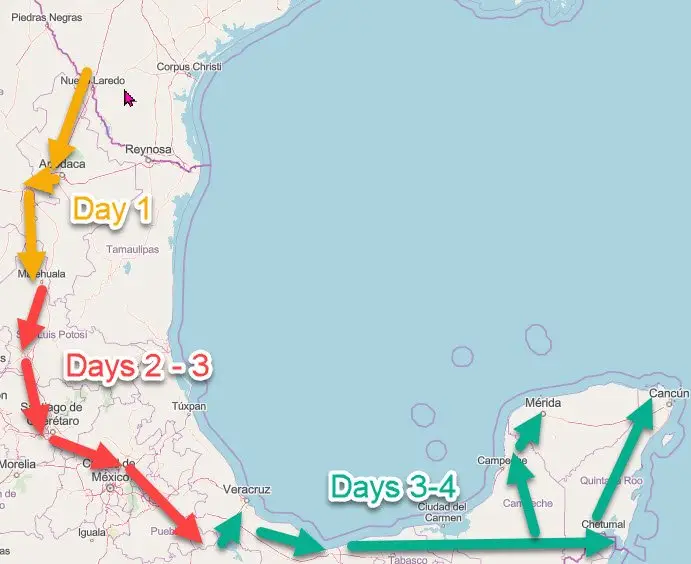
The Yucatán Peninsula is easy to access by air, ferry, and road. Choose your arrival point based on whether your trip is beach-focused, culture-focused, RV-focused, or built around a full peninsula loop.
| Gateway | Best For | Good Starting Routes |
|---|---|---|
| Cancun International Airport | Beach vacations, Riviera Maya, Holbox, Cozumel ferries, Tulum, and first-time visitors. | Cancun → Playa del Carmen → Tulum → Bacalar or Cancun → Valladolid → Mérida. |
| Tulum International Airport | Tulum, cenotes, Riviera Maya, Sian Ka’an, Bacalar, and southern Quintana Roo routes. | Tulum → Bacalar → Chetumal or Tulum → Playa del Carmen → Cancun. |
| Mérida International Airport | Colonial cities, Yucatán food, haciendas, cenotes, Uxmal, Progreso, and inland road trips. | Mérida → Valladolid → Chichén Itzá or Mérida → Uxmal → Campeche. |
| Campeche International Airport | Campeche City, Gulf Coast travel, Edzná, Calakmul routes, and quieter cultural trips. | Campeche → Edzná → Calakmul → Bacalar or Campeche → Mérida. |
| Cozumel International Airport | Diving, snorkeling, cruise travel, island vacations, and direct Cozumel stays. | Cozumel → ferry to Playa del Carmen → Riviera Maya road trip. |
Use these simple route ideas as starting points. The best itinerary depends on whether you want beaches, ruins, cenotes, food, diving, RV routes, or slower long-stay travel.
A simple introduction for travelers flying into Cancun and wanting a mix of beaches, ruins, and cenotes.
A stronger loop for travelers who want to experience all three states and reduce backtracking.
Best for RVers, retirees, remote workers, or travelers staying several weeks or longer.
Answers to common questions about driving, beaches, cenotes, safety, road trips, ruins, RV travel, and planning routes across the peninsula.
The Yucatán Peninsula includes the Mexican states of Quintana Roo, Yucatán, and Campeche. Together they combine Caribbean beaches, colonial cities, cenotes, Mayan ruins, islands, jungles, and Gulf Coast travel routes.
Cancun International Airport is the largest and most common gateway for first-time travelers. Mérida, Tulum, Campeche, and Cozumel airports can work better depending on your route and travel style.
Yes. The region is one of the easiest parts of Mexico for road trips because it offers good highways, tourism infrastructure, major airports, beach towns, colonial cities, cenotes, and many connected destinations.
Yes. Even if your U.S. or Canadian policy offers limited Mexico coverage, foreign policies are not recognized by Mexican authorities for liability claims. Travelers should carry valid Mexico auto insurance before crossing into Mexico.
Absolutely. Many RV travelers and long-stay visitors spend weeks or months exploring Mérida, Campeche, Bacalar, Playa del Carmen, Holbox, Tulum, and the broader peninsula during winter months.
Valladolid, Tulum, Cuzamá, and inland Yucatán are especially famous for cenotes, cave systems, freshwater swimming, snorkeling, and eco-tourism experiences.
From Cancun beaches and Riviera Maya resorts to Bacalar lagoons, Holbox sunsets, Mérida plazas, Campeche forts, cenotes, Mayan ruins, RV routes, and Caribbean road trips — the Yucatán Peninsula is one of the most rewarding regions in Mexico to explore.
Use the guides above to build your route, compare destinations, plan your border crossing, understand permits, and travel with confidence.